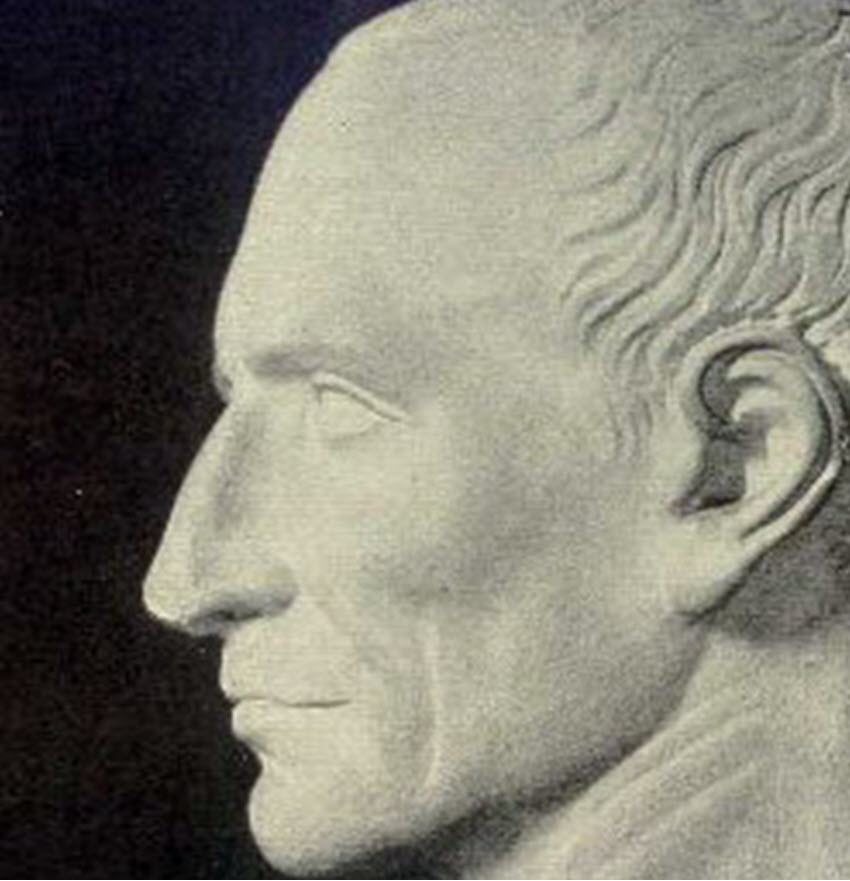
In his short but incredible career, Julius Caesar achieved more than most men could have achieved in several lifetimes. He conquered Gaul (now France), invaded Italy, and set the Republic of Rome on the path to world domination. When he was assassinated, Caesar had been planning further campaigns in the East, that would have led to the conquest of Persia and India. We can only speculate what the world would be like if Roman civilization had spread eastward to such an extent.
Caesar was not in fact Rome's first Emperor. He was technically not a monarch, and in fact was assassinated by political rivals who feared that he would have himself crowned King, and destroy the Republic. His assassination led to a brutal civil war throughout the Roman dominions, which permanently destroyed the Republic and ushered in the Empire which the conspirators had tried to prevent. Such was the influence of Julius Caesar that his name has been immortalized as synonymous with Emperor in languages such as Russian (Czar) and German (Kaiser) and in the collective memory of the world.
"Pardon, gentles all
The flat unraised spirit that hath dared
On this unworthy scaffold to bring forth
So great an object."
--SHAKESPEARE, Henry V.
The Roman Empire
I have called this work a "sketch" because thematerials do not exist for a portrait which shall be at onceauthentic and complete. The original authorities which are nowextant for the life of Caesar are his own writings, the speechesand letters of Cicero, the eighth book of the"Commentaries" on the wars in Gaul and the history of theAlexandrian war, by Aulus Hirtius, the accounts of the African warand of the war in Spain, composed by persons who wereunquestionably present in those two campaigns. To these must beadded the "Leges Juliae" which are preserved in theCorpus Juris Civilis. Sallust contributes a speech, and Catullus apoem. A few hints can be gathered from the Epitome of Livy and thefragments of Varro; and here the contemporary sources which can beentirely depended upon are brought to an end.
The secondary group of authorities from which the popularhistories of the time have been chiefly taken are Appian, Plutarch,Suetonius, and Dion Cassius. Of these the first three were dividedfrom the period which they describe by nearly a century and a half,Dion Cassius by more than two centuries. They had means ofknowledge which no longer exist--the writings, for instance, ofAsinius Pollio, who was one of Caesar's officers. But AsiniusPollio's accounts of Caesar's actions, as reported byAppian, cannot always be reconciled with the Commentaries; and allthese four writers relate incidents as facts which are sometimesdemonstrably false. Suetonius is apparently the most trustworthy.His narrative, like those of his contemporaries, was colored bytradition. His biographies of the earlier Caesars betray the samespirit of animosity against them which taints the credibility ofTacitus, and prevailed for so many years in aristocratic Romansociety. But Suetonius shows nevertheless an effort at veracity, anantiquarian curiosity and diligence, and a serious anxiety to tellhis story impartially. Suetonius, in the absence of evidence director presumptive to the contrary, I have felt myself able to follow.The other three writers I have trusted only when I have found thempartially confirmed by evidence which is better to be reliedupon.
The picture which I have drawn will thus be found deficient inmany details which have passed into general acceptance, and I havebeen unable to claim for it a higher title than that of an outlinedrawing.
Free Constitutions and Imperial Tendencies.--Instructiveness ofRoman History.--Character of Historical Epochs.--The Age ofCaesar.--Spiritual State of Rome.--Contrasts between Ancient andModern Civilization.
The Roman Constitution.--Moral Character of the Romans.--RomanReligion.--
Morality and Intellect.--Expansion of Roman Power.--TheSenate.--Roman
Slavery.--Effects of Intercourse with Greece.--PatricianDegeneracy.--The
Roman Noble.--Influence of Wealth.--Beginnings of Discontent.
Tiberius Gracchus.--Decay of the Italian Yeomanry.--AgrarianLaw.--Success and Murder of Gracchus.--Land Commission.--CaiusGracchus.--Transfer of Judicial Functions from the Senate to theEquites.--Sempronian Laws.--Free Grants of Corn.--Plans forExtension of the Franchise.--New Colonies.-- Reaction.--Murder ofCaius Gracchus
Victory of the Optimates.--The Moors.--History of Jugurtha.--TheSenate corrupted.--Jugurthine War.--Defeat of the Romans.--Jugurthacomes to Rome.--Popular Agitation.--The War renewed.--Roman Defeatsin Africa and Gaul.--Caecilius Metellus and Caius Marius.--Marriageof Marius.--The Caesars.--Marius Consul.--First Notice ofSylla.--Capture and Death of Jugurtha
Birth of Cicero.--The Cimbri and Teutons.--German Immigrationinto Gaul.-- Great Defeat of the Romans on the Rhone.--Wanderingsof the Cimbri.-- Attempted Invasion of Italy.--Battle ofAix.--Destruction of the Teutons.--Defeat of the Cimbri on thePo.--Reform in the Roman Army.-- Popular Disturbances inRome.--Murder of Memmius.--Murder of Saturninus and Glaucia
Birth and Childhood of Julius Caesar.--ItalianFranchise.--Discontent of the Italians.--Action of the LandLaws.--The Social War.--Partial Concessions.--Sylla andMarius.--Mithridates of Pontus.--First Mission of Sylla intoAsia.
War with Mithridates.--Massacre of Italians in Asia.--Invasionof Greece.--Impotence and Corruption of the Senate.--End of theSocial War.-- Sylla appointed to the Asiatic Command.--The Assemblytransfer the Command to Marius.--Sylla marches on Rome.--Flight ofMarius.--Change of the Constitution.--Sylla sails for theEast.--Four Years' Absence.--Defeat ofMithridates.--Contemporary Incidents at Rome.--CounterRevolution.-- Consulship of Cinna.--Return of Marius.--Capitulationof Rome.--Massacre of Patricians and Equites.--Triumph ofDemocracy.
The Young Caesar.--Connection with Marius.--Intimacy with theCiceros.-- Marriage of Caesar with the Daughter ofCinna.--Sertorius.--Death of Cinna.--Consulships of Norbanus andScipio.--Sylla's Return.--First Appearance of Pompey.--CivilWar.--Victory of Sylla.--The Dictatorship and theProscription.--Destruction of the Popular Party and Murder of thePopular Leaders.--General Character of AristocraticRevolutions.--The Constitution remodelled.--Concentration of Powerin the Senate.--Sylla's General Policy.--The Army.--Flight ofSertorius to Spain.--Pompey and Sylla.--Caesar refuses to divorcehis Wife at Sylla's Order.--Danger of Caesar.--HisPardon.--Growing Consequence of Cicero.--Defence ofRoscius.--Sylla's Abdication and Death
Sertorius in Spain.--Warning of Cicero to thePatricians.--Leading Aristocrats.--Caesar with the Army in theEast.--Nicomedes of Bithynia.-- The Bithynian Scandal.--Conspiracyof Lepidus.--Caesar returns to Rome.-- Defeat ofLepidus.--Prosecution of Dolabella.--Caesar taken by Pirates.--Senatorial Corruption.--Universal Disorder.--Civil War inSpain.--Growth of Mediterranean Piracy.--Connivance of theSenate.--Provincial Administration.--Verres in Sicily.--Prosecutedby Cicero.--Second War with Mithridates.--First Success ofLucullus.--Failure of Lucullus, and the Cause of it.--Avarice ofRoman Commanders.--The Gladiators.--The Servile War.--Results ofthe Change in the Constitution introduced by Sylla
Caesar Military Tribune.--Becomes known as a Speaker.--Is madeQuaestor.-- Speech at his Aunt's Funeral.--Consulship of Pompeyand Crassus.--Caesar marries Pompey's Cousin.--Mission toSpain.--Restoration of the Powers of the Tribunes.--The Equites andthe Senate.--The Pirates.--Food Supplies cut off from Rome.--TheGabinian Law.--Resistance of the Patricians.-- Suppression of thePirates by Pompey.--The Manilian Law.--Speech of Cicero.--Recall ofLucullus.--Pompey sent to command in Asia.--Defeat and Death ofMithridates.--Conquest of Asia by Pompey
History of Catiline.--A Candidate for the Consulship.--Catilineand Cicero.--Cicero chosen Consul.--Attaches Himself to theSenatorial Party.--Caesar elected Aedile.--Conducts an Inquiry intothe Syllan Proscriptions.--Prosecution of Rabirius.--Caesar becomesPontifex Maximus--and Praetor.--Cicero's Conduct asConsul.--Proposed Agrarian Law.--Resisted by Cicero.--Catilineagain stands for the Consulship.-- Violent Language in theSenate.--Threatened Revolution.--Catiline again defeated.--TheConspiracy.--Warnings sent to Cicero.--Meeting at Catiline'sHouse.--Speech of Cicero in the Senate.--Cataline joins an Army ofInsurrection in Etruria.--His Fellow-conspirators.--Correspondencewith the Allobroges.--Letters read in the Senate.--The Conspiratorsseized.-- Debate upon their Fate.--Speech of Caesar.--Caesar on aFuture State.-- Speech of Cato--and of Cicero.--The Conspiratorsexecuted untried.--Death of Catiline.
Preparations for the Return of Pompey.--Scene in theForum.--Cato and Metellus.--Caesar suspended from thePraetorship.--Caesar supports Pompey.--Scandals againstCaesar's Private Life.--General Character of them.--Festival ofthe Bona Dea.--Publius Clodius enters Caesar's House dressed asa Woman.--Prosecution and Trial of Clodius.--His Acquittal, and theReason of it.--Successes of Caesar as Propraetor inSpain.--Conquest of Lusitania.--Return of Pompey to Italy.--FirstSpeech in the Senate.-- Precarious Position of Cicero.--Cato andthe Equites.--Caesar elected Consul.--Revival of the DemocraticParty.--Anticipated Agrarian Law.-- Uneasiness of Cicero.
The Consulship of Caesar.--Character of his IntendedLegislation.--The Land Act first proposed in the Senate.--ViolentOpposition.--Caesar appeals to the Assembly.--Interference of theSecond Consul Bibulus.--The Land Act submitted to thePeople.--Pompey and Crassus support it.--Bibulus interposes, butwithout Success.--The Act carried--and other Laws.--The Senate nolonger being Consulted.--General Purpose of the Leges Juliae.--Caesar appointed to Command in Gaul for Five Years.--His Object inaccepting that Province.--Condition of Gaul, and the Dangers to beapprehended from it.--Alliance of Caesar, Pompey, and Crassus.--TheDynasts.--Indignation of the Aristocracy.--Threats to repealCaesar's Laws.--Necessity of Controlling Cicero andCato.--Clodius is made Tribune.--Prosecution of Cicero for IllegalActs when Consul.--Cicero's Friends forsake him.--He flies, andis banished.
Caesar's Military Narrative.--Divisions ofGaul.--Distribution of Population.--The Celts.--Degree ofCivilization.--Tribal System.--The Druids.--The AEdui and theSequani.--Roman and German Parties.--Intended Migration of theHelvetii.--Composition of Caesar's Army.--He goes toGaul.--Checks the Helvetii.--Returns to Italy for LargerForces.--The Helvetii on the Saône.--Defeated, and sent back toSwitzerland.--Invasion of Gaul by Ariovistus.--Caesar invites himto a Conference.--He refuses.-- Alarm in the Roman Army.--Caesarmarches against Ariovistus.--Interview between them.--Treachery ofthe Roman Senate.--Great Battle at Colmar.-- Defeat andAnnihilation of the Germans.--End of the First Campaign.--Confederacy among the Belgae.--Battle on the Aisne.--War with theNervii.--Battle of Maubeuge.--Capture of Namur.--The Belgaeconquered.-- Submission of Brittany.--End of the SecondCampaign.
Cicero and Clodius.--Position and Character of Clodius.--Catosent to Cyprus.--Attempted Recall of Cicero defeated byClodius.--Fight in the Forum.--Pardon and Return ofCicero.--Moderate Speech to the People.-- Violence in theSenate.--Abuse of Piso and Gabinius.--Coldness of the Senate towardCicero.--Restoration of Cicero's House.--Interfered with byClodius.--Factions of Clodius and Milo.--Ptolemy Auletes expelledby his Subjects.--Appeals to Rome for Help.--Alexandrian Envoysassassinated.-- Clodius elected aedile.--Fight in theForum.--Parties in Rome.--Situation of Cicero.--Rally of theAristocracy.--Attempt to repeal the Leges Juliae.--Conference atLucca.--Caesar, Pompey, and Crassus.--Cicero deserts theSenate.--Explains his Motives.--Confirmation of the Ordinances ofLucca.--Pompey and Crassus Consuls.--Caesar's Command prolongedfor Five Additional Years.--Rejoicings in Rome.--Spectacle in theAmphitheater.
Revolt of the Veneti.--Fleet prepared in the Loire.--Sea-fightat Quiberon.--Reduction of Normandy and of Aquitaine.--CompleteConquest of Gaul.--Fresh Arrival of Germans over the LowerRhine.--Caesar orders them to retire, and promises them Landselsewhere.--They refuse to go--and are destroyed.--Bridge over theRhine.--Caesar invades Germany.--Returns after a ShortInroad.--First Expedition into Britain.--Caesar lands at Deal, orWalmer.--Storm and Injury to the Fleet.--Approach of the Equinox.--Further Prosecution of the Enterprise postponed till the followingYear.-- Caesar goes to Italy for the Winter.--Large NavalPreparations.--Return of Spring.--Alarm on the Moselle.--Fleetcollects at Boulogne.--Caesar sails for Britain a SecondTime.--Lands at Deal.--Second and more Destructive Storm.--Shipsrepaired, and placed out of Danger.--Caesar marches throughKent.--Crosses the Thames, and reaches St. Albans.--Goes nofurther, and returns to Gaul.--Object of the Invasion ofBritain.--Description of the Country and People.
Distribution of the Legions after the Return fromBritain.--Conspiracy among the Gallic Chiefs.--Rising of theEburones.--Destruction of Sabinus, and a Division of the RomanArmy.--Danger of Quintus Cicero.--Relieved by Caesar inPerson.--General Disturbance.--Labienus attacked atLavacherie.--Defeats and kills Induciomarus.--Second Conquest ofthe Belgae.--Caesar again crosses the Rhine.--Quintus Cicero inDanger a Second Time.--Courage of a Roman Officer.--Punishment ofthe Revolted Chiefs.--Execution of Acco.
Correspondence of Cicero with Caesar.--Intimacy with Pompey andCrassus.-- Attacks on Piso and Gabinius.---Cicero compelled todefend Gabinius--and Vatinius.--Dissatisfaction with hisPosition.--Corruption at the Consular Elections.--PublicScandal.--Caesar and Pompey.--Deaths of Aurelia andJulia.--Catastrophe in the East.--Overthrow and Death of Crassus.--Intrigue to detach Pompey from Caesar.---Milo a Candidate for theConsulship.--Murder of Clodius.--Burning of theSenate-house.--Trial and Exile of Milo.--Fresh Engagements withCaesar.--Promise of the Consulship at the End of his Term inGaul.
Last Revolt of Gaul.--Massacre of Romans atGien.--Vercingetorix.--Effect on the Celts of the Disturbances atRome.--Caesar crosses the Cevennes.-- Defeats the Arverni.--Joinshis Army on the Seine.--Takes Gien, Nevers, and Bourges.--Fails atGergovia.--Rapid March to Sens.--Labienus at Paris.--Battle of theVingeanne.--Siege of Alesia.--Caesar's Double Lines.--Arrivalof the Relieving Army of Gauls.--First Battle on the Plain.--SecondBattle.--Great Defeat of the Gauls.--Surrender of Alesia.--Campaignagainst the Carnutes and the Bellovaci.--Rising on theDordogne.--Capture of Uxellodunum.--Caesar at Arras.--Completion ofthe Conquest.
Bibulus in Syria.--Approaching Term of Caesar'sGovernment.--Threats of Impeachment.--Caesar to be Consul or not tobe Consul?--Caesar's Political Ambition.--Hatred felt towardhim by the Aristocracy.--Two Legions taken from him on Pretense ofService against the Parthians.--Caesar to be recalled before theExpiration of his Government.--Senatorial Intrigues.-- Curiodeserts the Senate.--Labienus deserts Caesar.--Cicero in Cilicia.--Returns to Rome.--Pompey determined on War.--Cicero'sUncertainties.-- Resolution of the Senate and Consuls.--Caesarrecalled.--Alarm in Rome.-- Alternative Schemes.--Letters ofCicero.--Caesar's Crime in the Eyes of the Optimates.
Caesar appeals to his Army.--The Tribunes join him atRimini.--Panic and Flight of the Senate.--Incapacity ofPompey.--Fresh Negotiations.-- Advance of Caesar.--The CountryDistricts refuse to arm against him.-- Capture ofCorfinium.--Release of the Prisoners.--Offers of Caesar.--Continued Hesitation of Cicero.--Advises Pompey to makePeace.--Pompey, with the Senate and Consuls, flies toGreece.--Cicero's Reflections.-- Pompey to be anotherSylla.--Caesar Mortal, and may die by more Means than one.
Pompey's Army in Spain.--Caesar at Rome.--Departure forSpain.--Marseilles refuses to receive him.--Siege ofMarseilles.--Defeat of Pompey's Lieutenants at Lerida.--Thewhole Army made Prisoners.--Surrender of Varro.--Marseillestaken.--Defeat of Curio by King Juba in Africa.-- Caesar namedDictator.--Confusion in Rome.--Caesar at Brindisi.--Crosses toGreece in Midwinter.--Again offers Peace.--Pompey's Fleet inthe Adriatic.--Death of Bibulus.--Failure of Negotiations.--Caeliusand Milo killed.--Arrival of Antony in Greece with the SecondDivision of Caesar's Army.--Siege of Durazzo.--Defeat andRetreat of Caesar.--The Senate and Pompey.--Pursuit ofCaesar.--Battle of Pharsalia.--Flight of Pompey.--The Camptaken.--Complete Overthrow of the Senatorial Faction.--Cicero onthe Situation once more.
Pompey flies to Egypt.--State of Parties in Egypt.--Murder ofPompey.--His Character.--Caesar follows him to Alexandria.--Risingin the City.-- Caesar besieged in the Palace.--DesperateFighting.--Arrival of Mithridates of Pergamus.--Battle near Cairo,and Death of the Young Ptolemy.--Cleopatra.--The Detention ofCaesar enables the Optimates to rally.--Ill Conduct of Caesar'sOfficers in Spain.--War with Pharnaces.-- Battle of Zela, andSettlement of Asia Minor.
The Aristocracy raise an Army in Africa.--Supported byJuba.--Pharsalia not to end the War.--Caesar again inRome.--Restores Order.--Mutiny in Caesar's Army.--The Mutineerssubmit.--Caesar lands in Africa.-- Difficulties of theCampaign.--Battle of Thapsus.--No more Pardons.-- Afranius andFaustus Sylla put to Death.--Cato kills himself at Utica.-- Scipiokilled.--Juba and Petreius die on each other's Swords.--A Scenein Caesar's Camp.
Rejoicings in Rome.--Caesar Dictator for the Year.--Reforms theConstitution.--Reforms the Calendar--and the Criminal Law.--Dissatisfaction of Cicero.--Last Efforts in Spain of Labienus andthe Young Pompeys.--Caesar goes thither in Person, accompanied byOctavius.-- Caesar's Last Battle at Munda.--Death ofLabienus.--Capture of Cordova.-- Close of the Civil War.--GeneralReflections.
Caesar once more in Rome.--General Amnesty.--The SurvivingOptimates pretend to submit.--Increase in the Number ofSenators.--Introduction of Foreigners.--NewColonies.--Carthage.--Corinth.--Sumptuary Regulations.-- Digest ofthe Law.--Intended Parthian War.--Honors heaped on Caesar.--TheObject of them.--Caesar's Indifference.--SomeConsolations.--Hears of Conspiracies, but disregardsthem.--Speculations of Cicero in the Last Stage of the War.--Speechin the Senate.--A Contrast, and the Meaning of it.--TheKingship.--Antony offers Caesar the Crown, which Caesarrefuses.--The Assassins.--Who they were.--Brutus and Cassius.--TwoOfficers of Caesar's among them.--Warnings.--Meeting of theConspirators.--Caesar's Last Evening.--The Ides of March.--TheSenate-house.--Caesar killed.
Consternation in Rome.--The Conspirators in theCapitol.--Unforeseen Difficulties.--Speech of Cicero.--Caesar'sFuneral.--Speech of Antony.-- Fury of the People.--The Funeral Pilein the Forum.--The King is dead, but the Monarchysurvives.--Fruitlessness of the Murder.--Octavius andAntony.--Union of Octavius, Antony, and Lepidus.--Proscription ofthe Assassins.--Philippi, and the end of Brutus and Cassius.--Deathof Cicero.--His Character.
General Remarks on Caesar.--Mythological Tendencies.--SupposedProfligacy of Caesar.--Nature of theEvidence.--Servilia.--Cleopatra.--Personal Appearance ofCaesar.--His Manners in Private Life.--Considerations upon him as aPolitician, a Soldier, and a Man of Letters.--Practical Justice hisChief Aim as a Politician.--Universality of MilitaryGenius.--Devotion of his Army to him, how deserved.--Art ofreconciling Conquered Peoples.--General Scrupulousness andLeniency.--Oratorical and Literary Style.--Cicero's Descriptionof it.--His Lost Works.--Cato's Judgment on the Civil War.--HowCaesar should be estimated.--Legend of Charles V.-- SpiritualCondition of the Age in which Caesar lived.--His Work on Earth toestablish Order and Good Government, to make possible theIntroduction of Christianity.--A Parallel.