Anno Urbis - The Roman Empire Online

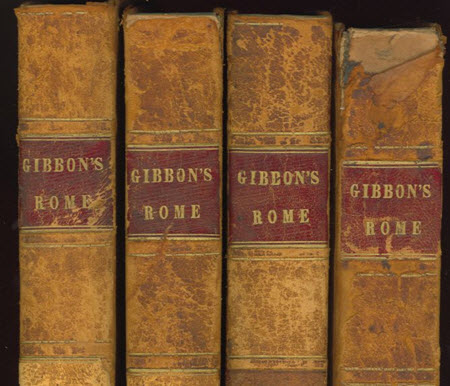
Gibbon's The Decline And Fall Of The Roman Empire

Home | Prev | Next | Contents

Volume 1 - Volume 2 - Volume 3 - Volume 4 - Volume 5 - Volume 6 -
Roman Empire


History Of The Decline And Fall Of The Roman Empire

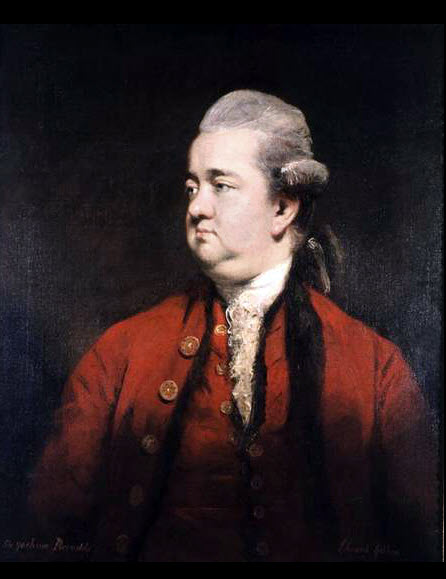
Edward Gibbon, Esq.

With notes by the Rev. H. H. Milman

Vol. 1

1782 (Written), 1845 (Revised)

Introduction

Preface By The Editor.

The great work of Gibbon is indispensable to the student of history. The literature of Europe offers no substitute for "The Decline and Fall of the Roman Empire." It has obtained undisputed possession, as rightful occupant, of the vast period which it comprehends. However some subjects, which it embraces, may have undergone more complete investigation, on the general view of the whole period, this history is the sole undisputed authority to which all defer, and from which few appeal to the original writers, or to more modern compilers. The inherent interest of the subject, the inexhaustible labor employed upon it; the immense condensation of matter; the luminous arrangement; the general accuracy; the style, which, however monotonous from its uniform stateliness, and sometimes wearisome from its elaborate art., is throughout vigorous, animated, often picturesque always commands attention, always conveys its meaning with emphatic energy, describes with singular breadth and fidelity, and generalizes with unrivalled felicity of expression; all these high qualifications have secured, and seem likely to secure, its permanent place in historic literature.

This vast design of Gibbon, the magnificent whole into which he has cast the decay and ruin of the ancient civilization, the formation and birth of the new order of things, will of itself, independent of the laborious execution of his immense plan, render "The Decline and Fall of the Roman Empire" an unapproachable subject to the future historian:* in the eloquent language of his recent French editor, M. Guizot: --

"The gradual decline of the most extraordinary dominion which has ever invaded and oppressed the world; the fall of that immense empire, erected on the ruins of so many kingdoms, republics, and states both barbarous and civilized; and forming in its turn, by its dismemberment, a multitude of states, republics, and kingdoms; the annihilation of the religion of Greece and Rome; the birth and the progress of the two new religions which have shared the most beautiful regions of the earth; the decrepitude of the ancient world, the spectacle of its expiring glory and degenerate manners; the infancy of the modern world, the picture of its first progress, of the new direction given to the mind and character of man -- such a subject must necessarily fix the attention and excite the interest of men, who cannot behold with indifference those memorable epochs, during which, in the fine language of Corneille --

'Un grand destin commence, un grand destin s'achève.'"

This extent and harmony of design is unquestionably that which distinguishes the work of Gibbon from all other great historical compositions. He has first bridged the abyss between ancient and modern times, and connected together the two great worlds of history.

Table of Contents

Volume 1
Volume 2
Volume 3
Volume 4
Volume 5
Volume 6


Prev | Next | Contents


Rome: Engineering an Empire
Ursus' review of the History Channel DVD:"Some have said Rome's greatness was achieved by the spade as much as by the sword. Certainly the empire would have lacked much of its grandeur without its famed engineering feats. The History Channel produced one of its better outings in this DVD which ...

12 Byzantine Rulers: Part 11 - Irene
When the weak, ineffectual emperor Leo IV died in 780, he left the empire divided and in the hands of an orphan from Athens; the beautiful and grasping Empress Irene. 17 years later she was crowned as sole ruler after murdering her own son to take his place. It was hardly an auspicious start, beset by enemies on every border, the empire was now facing its most serious internal threat; the terrible iconoclastic controversy. Successive emperors had neglected the frontiers to concentrate on the war against icons, and in the process had not only weakened the state, but had destroyed some of the finest works of art the Byzantine world ever produced. Even worse, an emperor had at last returned to the long vacant throne of the West, to challenge Byzantium's claim of universal temporal domination. If ever the empire had needed strong leadership, it was now. Join Lars Brownworth as he looks at the reign of Irene; the only woman to rule the empire, not as Queen or Regent, but as a King.

The Golden Rule
Treat your inferior as you would wish your superior to treat you. .... Remember, if you please, that the man yo call slave sprang from the same seed, enjoys the same daylightm breathes like you, lives like you, dies like you, You can as easily conceive him a free man as he can conceive you a slave. - Seneca


12 Byzantine Rulers: Part 2 - Diocletian
The Emperor Diocletian was to erase civil war within Byzantium for the next thousand years but walked away from it all to become a cabbage farmer. Who was this military man and how could he just give it all up? Join Lars Brownworth as the story of Byzantium's first great emperor unfolds.

12 Byzantine Rulers: Part 8 - Justinian - Part 2
With the return of relative calm after the reign's turbulent beginnings, Justinian could turn to his most ambitious project, the reconquest of the Western Empire. For this, his most cherished goal, he looked to one man, the young, promising general, Belisarius. Justinian was rewarded with unswerving loyalty and unquestioned brilliance, and yet the road to reconquest was to be a difficult and tragic one for both men. Join Lars Brownworth as the story of Justinian's reconquest of Africa and Italy unfolds.


Gibbon's The Decline and Fall of the Roman Empire is one of the greatest texts in the English language. In magisterial prose, Gibbon charts the gradual collapse of the Roman rule form Augustus (23 BC - AD 14) to the first of the barbarian kings, Odoacer (476- 490 AD). It is a remarkable account, with the extravagant corruption and depravity of emperors such as Commodus, Caracalla, and Elagabalus contrasted by the towering work of Constantine, Julian, and other remarkable men. It remains the standard work of scholarship on the subject two hundred years after it is written; yet equally important, in its sheer accessibility, it is an unforgettable story. Now you don't have to read this massive book - download it in audio book format now and listen to it in your spare time or while you commute!


Google
 
Web annourbis.com


Links: MovieAce.com -  Shakespeare-1.com -  AudioBookList.com -  Encyclopedia-1.com -  BookUpdate.com -  Book-Lover.com